

 Blog|
 5 min read
11 ways to reduce food waste in hospitality
Reducing food waste is one way to improve the impact and bottom line of your tourism or hospitality business
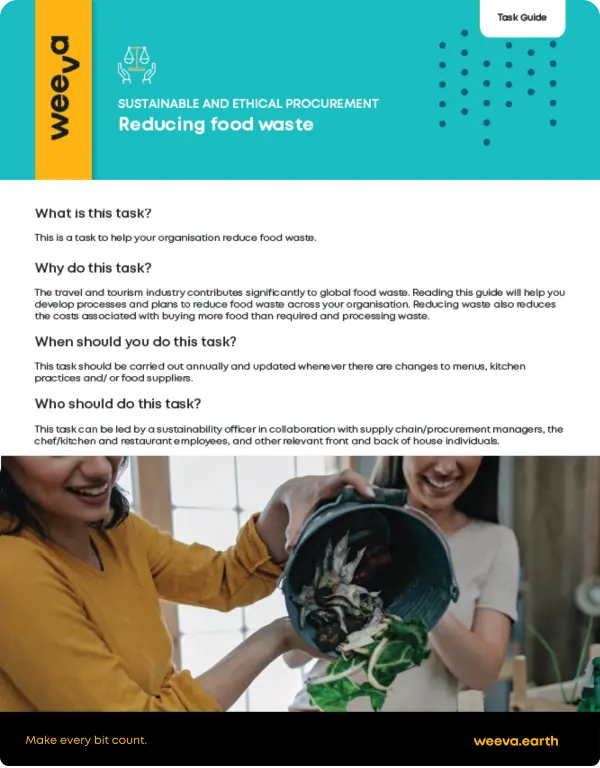
Free guide: Reducing food waste
Take the first step! Download one of our popular task guides and start reducing your food waste today.
The hospitality and food service industry accounts for 26% of the 931 million tonnes of food that’s wasted every year.
That’s a staggering figure when you consider that one in 10 people don’t have enough to eat – not to mention the money you’re also scraping off your plate.
Reducing food waste is one way to improve the impact and bottom line of your business. In fact, hotels that invest in food waste reduction programmes see an average 600% return on investment.
Reduce waste = lower costs and fewer carbon emissions
Turn your hotel and resort waste around with these 11 practical tips.
1. Create your own Compost
Turn food waste into nutrient-rich compost that you can use in your gardens, sell or donate to local farmers. You can also send food waste to composting hubs to divert it away from landfills, where it releases methane, (a greenhouse gas which contributes to climate change).
2. Buffer the buffet
People usually overestimate how much they can stomach at all-you-can-eat buffets. With smaller plates, guests will dish up less food, which means fewer leftovers. One study found that reducing plate size by just 3cm resulted in a 20% reduction in food waste.
3. Give leftovers a second chance
Offer guests compostable or reusable containers to take away their leftovers. Reuse leftover buffet items, like potatoes, for a breakfast fry-up. Chop up and freeze fruit that’s bruised, brown, or starting to go soft and use it in smoothies, sorbet, or coulis.
4. Educate staff
Teach your staff the importance of reducing food waste, how to sort it, and how to compost it. They might have great ideas about cutting out kitchen waste that you didn’t think of – and that you could incentivise them for.
5. Nourish your community
Check local food donation and safety laws first, or let your staff take it home to feed their families. Food that’s not fit for human consumption but that is still edible (e.g., day-old salad) can be donated to farms as animal feed, which helps to reduce feed costs.
6. Take stock
Keep track of everything in the fridge, freezer, and pantry. Only keep the ingredients you need, note best-before dates, donate stuff that you’re unlikely to use before it expires and rotate stock accordingly.
7. Get strict about storage
Store food in air-tight containers away from heat, light and moisture. Get your fridges serviced and make sure they’re running optimally. Label all food with the date it was made and the date it can be kept until.
8. Mix up the menu
Change things up to include seasonal, local and readily available ingredients. If an item isn’t popular, take it off the menu, or consider simplifying your menu (offer 10 options instead of 20). These strategies will reduce the amount of stock you need to keep on hand and the amount you throw away. And guests will return every season to try new dishes.
9. Buy local
Buy fresh, in-season ingredients from local farmers and suppliers. This not only supports the local economy but helps to reduce the carbon footprint associated with sourcing, storing and transporting out-of-season produce.
10. Top-to-tail and ugly veg
Clever, forward-thinking chefs are innovatively using all parts of an animal to avoid the supplier or the kitchen wasting parts not commonly ordered. Similarly, chefs are also using more edible parts of the vegetables like leaves, and not rejecting the less than perfect looking but still fresh and tasty, produce.
11. Audit food waste
An audit helps you to identify the source, weight and type of food waste – and how much it’s costing you.
Reducing food waste in tourism and hospitality means changing how you do things, including you buy and store food, menu design, how much you serve, and diverting as much as possible.
Watch this video for some inspiration, or read this article to understand the implications of food waste.
Weeva can help you start a food waste management system; including staff engagement and education, ethical procurement and how to make waste management part of the daily running of your business, ultimately to make food waste a thing of the past.
Free guide: Reducing food waste
Take the first step! Download one of our popular task guides and start reducing your food waste today.
Why not see for yourself? Book a demo with our team and learn how you can simplify your day-to-day hotel operations and thrive.


Other content you may like

Sustainable water management for hotels

Reducing Plastic in the Travel and Tourism Industry

